
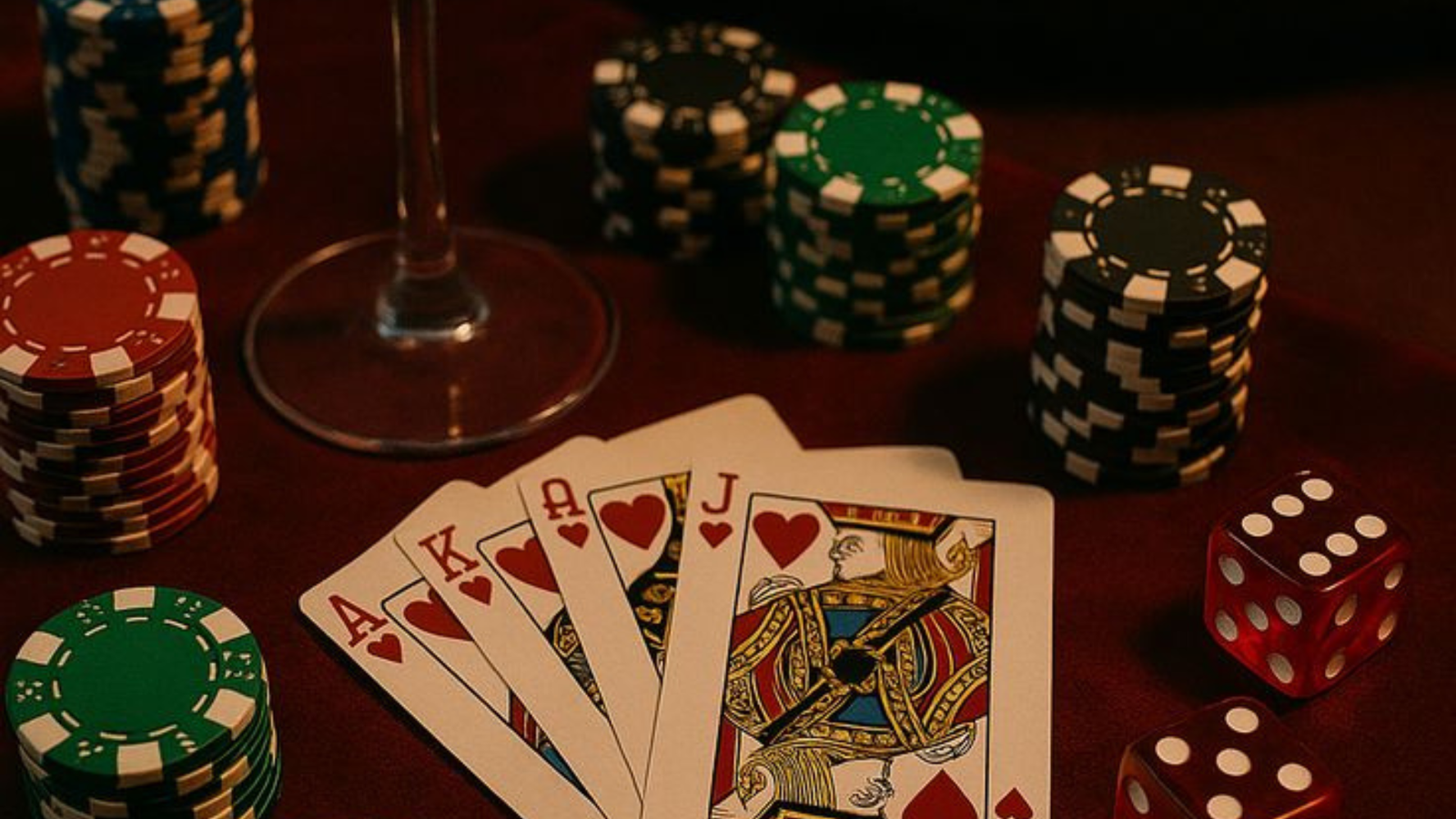
Gambling decision psychology helps explain why people make particular choices when playing casino games or placing bets. Decisions rarely depend on probability alone. Emotions, expectations, personal experiences, and cognitive biases can all influence how someone evaluates risk. As a result, two players facing identical odds may respond very differently.
A player might stop after losing several rounds, while another increases their stakes to recover the money. Someone else may walk away after a small win, believing they have reached a satisfactory result. These reactions reveal how psychological factors shape gambling behaviour.
Understanding these patterns can help players recognise poor decisions before they become expensive habits. It also provides useful context for anyone who wants to explore casino games and understand the thinking behind different gaming choices.
What Gambling Decision Psychology Reveals About Risk
People do not always assess gambling risks objectively. Instead, they interpret potential outcomes through personal expectations and emotional responses.
For example, a player considering a roulette bet may understand that previous spins do not determine the next result. However, after seeing several consecutive red outcomes, they might believe black is now more likely.
This is an example of the gambler’s fallacy. Independent events remain independent, even when recent results create an apparent pattern.
Gambling decision psychology examines how these interpretations influence behaviour. Several psychological processes commonly affect decisions:
-
Risk perception: Players may underestimate the likelihood of losing.
-
Reward anticipation: The possibility of winning can become more influential than the potential cost.
-
Emotional regulation: Excitement or frustration can affect judgement.
-
Confirmation bias: People may focus on information supporting their existing beliefs.
-
Selective memory: Memorable wins can overshadow numerous smaller losses.
These processes do not affect everyone equally. Nevertheless, recognising them can improve awareness during gambling sessions.

The Gambler’s Fallacy and the Search for Patterns
Humans naturally look for patterns. This ability helps people make sense of everyday situations, but it can create problems when interpreting random outcomes.
Consider a player using an online slot game. They notice that a particular symbol has not appeared for several rounds. The player begins expecting it to arrive soon, even though each spin uses an independent random outcome.
The assumption feels reasonable. It is still incorrect.
Why previous results can mislead players
The gambler’s fallacy occurs when someone believes that past independent outcomes influence future probabilities. In games based on random number generators, previous spins do not make a particular symbol more likely on the next spin.
Roulette provides another clear example. A sequence of five red results does not increase the probability of black on the next independent spin.
Players may also interpret random clusters as evidence of a predictable system. However, random sequences can contain repeated outcomes without following a meaningful pattern.
A useful response is to evaluate each wager according to its actual rules and probabilities. Avoid changing stake sizes simply because recent results appear unusual.
How Emotions Change Gambling Decisions
Emotions can influence decisions before, during, and after a gambling session. Excitement may encourage someone to continue playing, while disappointment can create pressure to recover losses.
These reactions become especially noticeable after a significant win or losing streak.
Imagine a player who starts with a fixed budget of $50. After winning $30, they feel confident and increase their stakes. Later, a few losses occur, prompting them to chase the earlier profit.
The original plan gradually disappears.
The influence of loss chasing
Loss chasing happens when someone continues gambling or increases their stakes to recover money already lost. It often involves emotional reasoning rather than a careful assessment of risk.
The player may think one more round will restore the balance. Unfortunately, there is no guarantee that another wager will produce a favourable result.
Loss aversion can contribute to this behaviour. People often experience the discomfort of losing more intensely than the satisfaction of gaining an equivalent amount.
Consequently, a player might take increasingly risky decisions to avoid accepting a loss.
Practical safeguards include:
-
Set a spending limit before starting.
-
Decide on a stopping point in advance.
-
Never borrow money to continue gambling.
-
Avoid increasing stakes to recover previous losses.
-
Take a break when frustration affects judgement.
These measures create boundaries between planned entertainment and emotionally driven decisions.
Near Misses, Rewards, and the Psychology of Continued Play
A near miss occurs when a gambling outcome appears close to a winning result without actually producing one. Slot games provide familiar examples, such as two jackpot symbols appearing alongside a third symbol on an adjacent reel.
Although the result is a loss, the visual presentation may feel encouraging. Players can interpret the outcome as evidence that a win is approaching.
However, a near miss does not necessarily indicate improved winning prospects. In random games, the next outcome is determined independently according to the game’s mechanics.
Why unpredictable rewards attract attention
Psychological research has examined how unpredictable reward schedules influence behaviour. When rewards arrive inconsistently, people may continue repeating an activity while anticipating another positive outcome.
This principle helps explain why gambling products use varied reward structures. Some sessions produce frequent small wins, while others involve longer periods without a significant return.
Importantly, a winning animation does not always mean the player has made a net profit. A game may display a payout that remains smaller than the original stake.
Players should therefore track their actual balance rather than relying on visual effects or individual winning rounds.
Cognitive Biases That Affect Betting Choices
Cognitive biases are systematic thinking errors that influence how people interpret information. In gambling, they can affect everything from game selection to stake sizing.
The illusion of control is one common example. A player may believe that choosing when to press a button or how to throw dice influences a random outcome.
In games where results depend on chance, these actions do not necessarily change the underlying probabilities.
Another example is the availability heuristic. People may overestimate the likelihood of a major win because memorable jackpot stories receive considerable attention.
A player who frequently hears about large payouts might develop unrealistic expectations about their own chances.
| Cognitive bias | Typical gambling behaviour |
|---|---|
| Illusion of control | Believing personal actions influence random outcomes |
| Gambler’s fallacy | Expecting a different result after repeated outcomes |
| Confirmation bias | Remembering evidence that supports a betting system |
| Availability heuristic | Overestimating wins after hearing memorable stories |
| Sunk cost fallacy | Continuing because money has already been spent |
Recognising these patterns can help players question their assumptions. A useful habit is to separate measurable probabilities from personal impressions.
Building Better Decisions Through Practical Limits
Understanding gambling decision psychology becomes more useful when players apply it to everyday behaviour. Awareness alone may not prevent emotional decisions, especially during extended sessions.
Therefore, practical limits can provide structure before excitement or frustration takes over.
A player might decide to spend $40 on entertainment during a weekend session. That amount should remain affordable even if the entire balance is lost.
The player can also establish a time limit, such as 45 minutes. Once the session ends, they stop regardless of whether they are winning or losing.
Other useful approaches include:
-
Compare game rules and published return-to-player information before choosing a game.
-
Understand that RTP describes theoretical long-term returns, not guaranteed individual results.
-
Avoid gambling when tired, distressed, or under financial pressure.
-
Keep gambling separate from money needed for rent, bills, and essential expenses.
-
Use available deposit, loss, and session limits.
-
Take regular breaks to reassess spending and behaviour.
If gambling begins affecting relationships, finances, or daily responsibilities, stopping and seeking support is a sensible step. Self-exclusion tools and professional support services can help people regain control.
When Understanding Psychology Makes a Difference
Gambling decision psychology explains why knowledge of odds does not always translate into rational behaviour. A player can understand probability while still reacting emotionally to a losing streak or an exciting near miss.
That distinction matters. Better decisions require awareness of both mathematical risks and personal behaviour.
Players should question assumptions, recognise emotional triggers, and avoid treating previous outcomes as predictions. They should also remember that no betting system can remove the house edge from casino games.
Ultimately, gambling is safest when treated as paid entertainment rather than a financial strategy. Clear spending boundaries and realistic expectations help keep decisions grounded, even when outcomes become unpredictable.